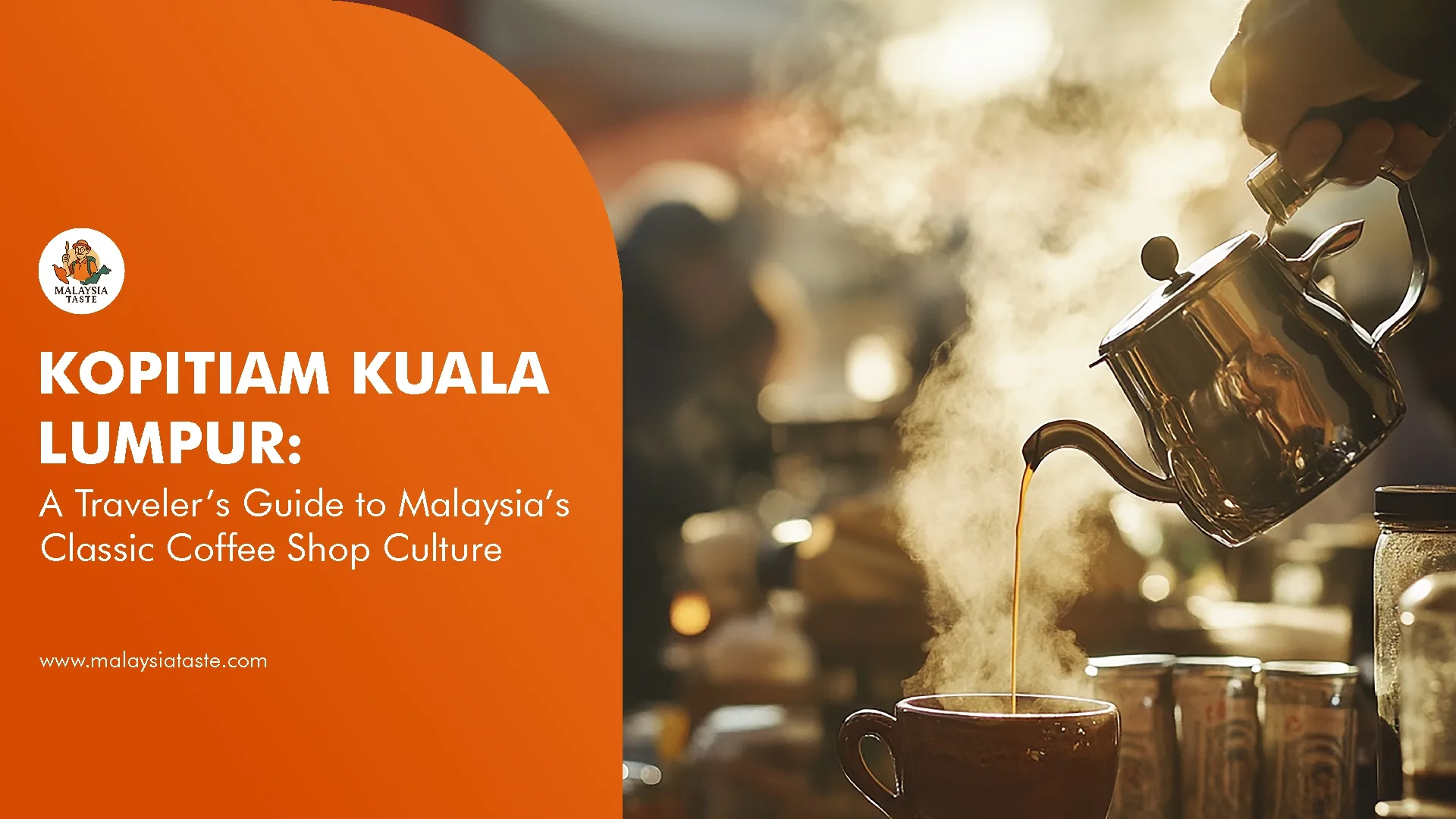
If you want to see how Kuala Lumpur starts its day, go to a kopitiam. Before the malls open and the traffic builds, people all over the city are sitting down to a cup of kopi, kaya toast with soft-boiled eggs, a packet of nasi lemak or a plate of roti canai.
For visitors, a kopitiam in Kuala Lumpur is one of the easiest ways to join in. There’s no booking and no complicated menu. A small table, a hot drink and food that has been part of Malaysian daily life for generations is all you need.
What is a kopitiam?
A kopitiam is a traditional coffee shop found all over Malaysia and Singapore. The name joins two words: kopi, meaning coffee, and tiam, the Hokkien word for shop. So in English, kopitiam simply means coffee shop.
In practice it’s more than that. A kopitiam is part café, part breakfast spot and part neighbourhood meeting place. People stop in before work, families come on weekends, older regulars read the newspaper over a second coffee, and visitors get to try everyday Malaysian food somewhere relaxed.
A traditional kopitiam serves local coffee and tea, toast, eggs, noodles, rice dishes and other simple meals. Some have several food stalls inside or right next door, each cooking its own dish, while others run one fixed menu. The food changes from shop to shop, but the feel is usually the same: casual, practical, lively and very much part of local life.
Why kopitiam culture matters in Kuala Lumpur
KL is a mixed city, and you can see it in a kopitiam. Under one roof you might find Chinese-Malaysian coffee traditions, Malay breakfast dishes, Indian-style roti and local snacks, eaten by people from every background.
That mix says a lot about Malaysian food in general. Most dishes here carry stories of migration, trade and families adapting recipes over generations. Our guide to Malaysian cuisine goes into that history in more detail.
A kopitiam isn’t designed for social media, although plenty of them are photogenic in their own way. What you’re really there for is the atmosphere: cups clinking on saucers, the smell of toast, servers moving quickly between tables, and people eating food they’ve known since childhood. It’s a good way to see how the city actually lives, away from the landmarks.
Kopitiam Kuala Lumpur: what to order first
If it’s your first kopitiam, the menu can look unfamiliar. Most of the classics are easy to like, though, even if Malaysian food is new to you.
Kaya toast
The breakfast most people picture when they think of a kopitiam. It’s toasted bread spread with kaya, a sweet coconut and egg jam, usually with butter as well.
It’s simple and very good. The toast is crisp, the kaya is fragrant and sweet, and the butter adds richness. If you’re from Europe or America it’ll feel half familiar, since it’s still toast, but the coconut and pandan notes make it something different.
How to eat kaya toast
The classic order is kaya toast with soft-boiled eggs and a local coffee. Some people dip the toast into the eggs, others eat everything separately. There’s no wrong way, so try both.
Soft-boiled eggs
A kopitiam staple. The eggs are cracked into a small bowl and seasoned with soy sauce and white pepper, and they come out soft, silky and warm.
If you’re used to scrambled eggs or omelettes, this can seem odd at first. Have them alongside kaya toast and coffee and it makes sense: the savoury eggs balance the sweet toast.
Kopi
Local Malaysian coffee, brewed strong and usually served with condensed milk or sugar. It’s bold and roasty, and sweeter than the black coffee you’d get in most Western countries.
There are lots of ways to order kopi, and the names can look confusing. The drinks list further down covers the basics.
Teh
Not a coffee drinker? Order teh, Malaysian tea. Like kopi, it comes with condensed milk, evaporated milk, sugar or no milk at all, depending on how you ask for it.
Teh tarik, or pulled tea, is the favourite. It’s creamy and frothy, made by pouring the tea back and forth between two containers until it’s smooth with foam on top.
Nasi lemak
Some kopitiams serve nasi lemak, one of Malaysia’s best-known dishes: coconut rice with sambal, fried anchovies, peanuts, cucumber and egg, sometimes with fried chicken or rendang.
It’s the one to order if you want more than toast. The sambal can be spicy, so ask for it on the side if you’re wary of chilli.
Roti canai
Depending on the kopitiam, or the stall next door, you might also find roti canai. This flaky flatbread comes with dhal or curry for dipping, crisp on the outside and soft inside.
It’s a warm, comforting breakfast that won’t feel too unfamiliar, and it goes well with teh tarik.
How to order kopi and teh in a kopitiam
Ordering drinks feels like learning a little local language. Once you know a few words, it’s half the fun.
Common kopitiam drink terms
- Kopi: coffee with condensed milk
- Kopi O: black coffee with sugar
- Kopi C: coffee with evaporated milk and sugar
- Kopi kosong: coffee without sugar
- Teh: tea with condensed milk
- Teh O: tea with sugar, no milk
- Teh C: tea with evaporated milk and sugar
- Ais: iced
So “kopi ais” gets you iced local coffee, and “teh O” is tea with sugar but no milk.
You don’t need to learn the whole system. A few terms make ordering easier, and it’s satisfying when your drink arrives exactly the way you asked.
Traditional vs modern kopitiams in Kuala Lumpur
KL has both kinds, and they feel quite different.
Traditional kopitiams
Old-school shops with marble tables, plastic chairs, tiled floors and handwritten menus. Service is quick and practical, and they get busy over breakfast and lunch.
This is where you feel the city’s daily rhythm. Regulars come and go, everyone knows what they want, and the food is familiar, affordable and comforting. They aren’t polished, and that’s a big part of their charm.
Modern kopitiams
Cleaner design, clearer menus and more comfortable seats if you want to linger. Many serve the classic dishes in a more organised setting.
They’re a good first step if you’d like to try local food somewhere a little more accessible. You lose some of the old-school atmosphere in exchange.
Which one should you choose?
Try both. Start with a traditional kopitiam for the atmosphere, then visit a modern one and compare. Together they show how kopitiam culture keeps changing while holding on to what makes it Malaysian.
Halal kopitiams
Kopitiams vary in what they serve. Some traditional shops have pork on the menu, while other kopitiams, including some modern chains, display halal certification. If you eat halal, look for the certificate on the wall or ask before you order. Our guide to halal food in Kuala Lumpur has more tips.
Best time to visit a kopitiam in Kuala Lumpur
Morning, if you can. Breakfast is when a kopitiam feels most like itself: people grabbing something before work, families sitting down together and the smell of coffee and toast everywhere.
Many kopitiams also serve lunch and afternoon snacks, so if you’d prefer it quieter, go after the breakfast rush.
Morning
Best for kaya toast, soft-boiled eggs, kopi, nasi lemak and roti canai. Our guide to Malaysian breakfast food has more morning ideas.
Late morning
A slower pace and an easier time to find a seat.
Afternoon
Good for a coffee, a snack or a light meal between sightseeing stops.
Kopitiam food for first-time visitors
Not sure what to order? Start with an easy combination so you get a feel for the place without overthinking it.
An easy first order
- Kaya toast
- Soft-boiled eggs
- Kopi or teh
- Nasi lemak or roti canai if you’re hungry
That gives you something sweet, something savoury and a proper local drink.
For coffee lovers
Order kopi or kopi C. It’s stronger and sweeter than most Western-style coffee, which is the point.
For non-coffee drinkers
Go for teh tarik, teh C or iced lemon tea if they have it. Teh tarik is the one we’d choose; it’s one of Malaysia’s best-loved drinks.
For food vloggers and bloggers
Kopitiams give you food and atmosphere in one place. Film the toast being made, the coffee being poured, the eggs being cracked and the general movement of the shop. Those details tell a better story than a single plate shot.
Kopitiam etiquette: simple tips for visitors
Kopitiams are relaxed, but a few small habits help.
Find a seat first
In many places you grab a table before ordering, though it varies. If you’re not sure, watch what everyone else does or ask a staff member.
Be ready to share tables
Space is tight at busy times, and sharing a table with other customers is normal in traditional shops.
Keep your order simple
When it’s crowded, order clearly and stick to the basics rather than asking for lots of changes.
Bring cash
Many places take digital payments, but smaller and older kopitiams may still prefer cash. Carry small notes.
Go with the pace
Traditional kopitiams move fast, and staff won’t always have time to explain every item. A little reading beforehand, or a local guide, makes the visit smoother.
Why kopitiams belong on a Kuala Lumpur food tour
A kopitiam shows you the everyday side of Malaysian food. It’s the morning version of KL: slower, warmer and more personal than the night markets and street food stalls.
It’s also where you see how locals actually eat, from the regular orders to the shared tables and the drinks ordered in shorthand.
What a local guide can explain
A local guide can help you understand:
- How to order kopi and teh
- What kaya is made from
- Why soft-boiled eggs come with toast
- Which dishes are mild and which are spicy
- How kopitiam culture connects to Malaysian history
- What locals usually eat for breakfast
- How a traditional coffee shop differs from a modern café
Our Petaling Street food tour through Chinatown has morning starts at 10am and 11am, as well as afternoon ones, if you’d like a guide for a morning of eating. Want a kopitiam stop worked into your day? Ask us about a custom food tour and we’ll tell you what’s possible. All our tours are led in English by MOTAC-registered guides.
Where a kopitiam fits in a Kuala Lumpur food itinerary
Start your food day at a kopitiam. It’s a gentle introduction before you move on to heavier street food, spicier dishes and night markets.
A food day in Kuala Lumpur
Morning: kopitiam breakfast
Kaya toast, eggs, kopi and maybe a plate of nasi lemak.
Lunch: a rice or noodle dish
Chicken rice, curry laksa, banana leaf rice or char kway teow. Our list of what to eat in KL has plenty more.
Afternoon: dessert or a local snack
Cendol, kuih, apam balik or tropical fruit. See our guide to Malaysian desserts.
Evening: street food
A food street or a guided food tour for satay, grilled dishes, noodles and desserts. Our KL night market food guide will help you pick.
It works because you start light and familiar, then build up to bigger flavours as the day goes on.
Common mistakes visitors make in kopitiams
Kopitiams are easy to enjoy, but visitors sometimes miss the best bits.
Only ordering Western-style coffee
Try local kopi at least once. It might be sweeter or stronger than you expect, and that’s part of the experience.
Skipping the soft-boiled eggs
They look plain, but they’re central to the classic kopitiam breakfast. Try them with soy sauce and pepper before you decide.
Expecting a quiet café
A kopitiam isn’t a hushed specialty coffee shop. It can be loud, busy and fast, and that energy is part of the charm.
Not asking for less sugar
Local drinks can be very sweet. If you’d like yours less sweet, ask for less sugar, or order it kosong.
Going only once
One visit is good, but try a few different kopitiams and you’ll notice each one has its own regulars, its own personality and its own signature dishes.
Make time for a kopitiam in Kuala Lumpur
A kopitiam in Kuala Lumpur may look ordinary from the street, but it’s where coffee, toast, eggs, noodles, rice and conversation come together in a very Malaysian way. You don’t need to know every dish or be adventurous from the first bite. Start with kaya toast, soft-boiled eggs and kopi, then work your way to nasi lemak, roti canai and noodles.
Food in Malaysia is tied up with routine and community: people starting the day at the same table and ordering the drink they’ve loved for years. So when you’re in KL, set aside one morning for a kopitiam breakfast. Sit down, order slowly and watch the room. If you’d like to keep eating with a local afterwards, have a look at our Kuala Lumpur food tours.

2 Comments
Leave a Comment