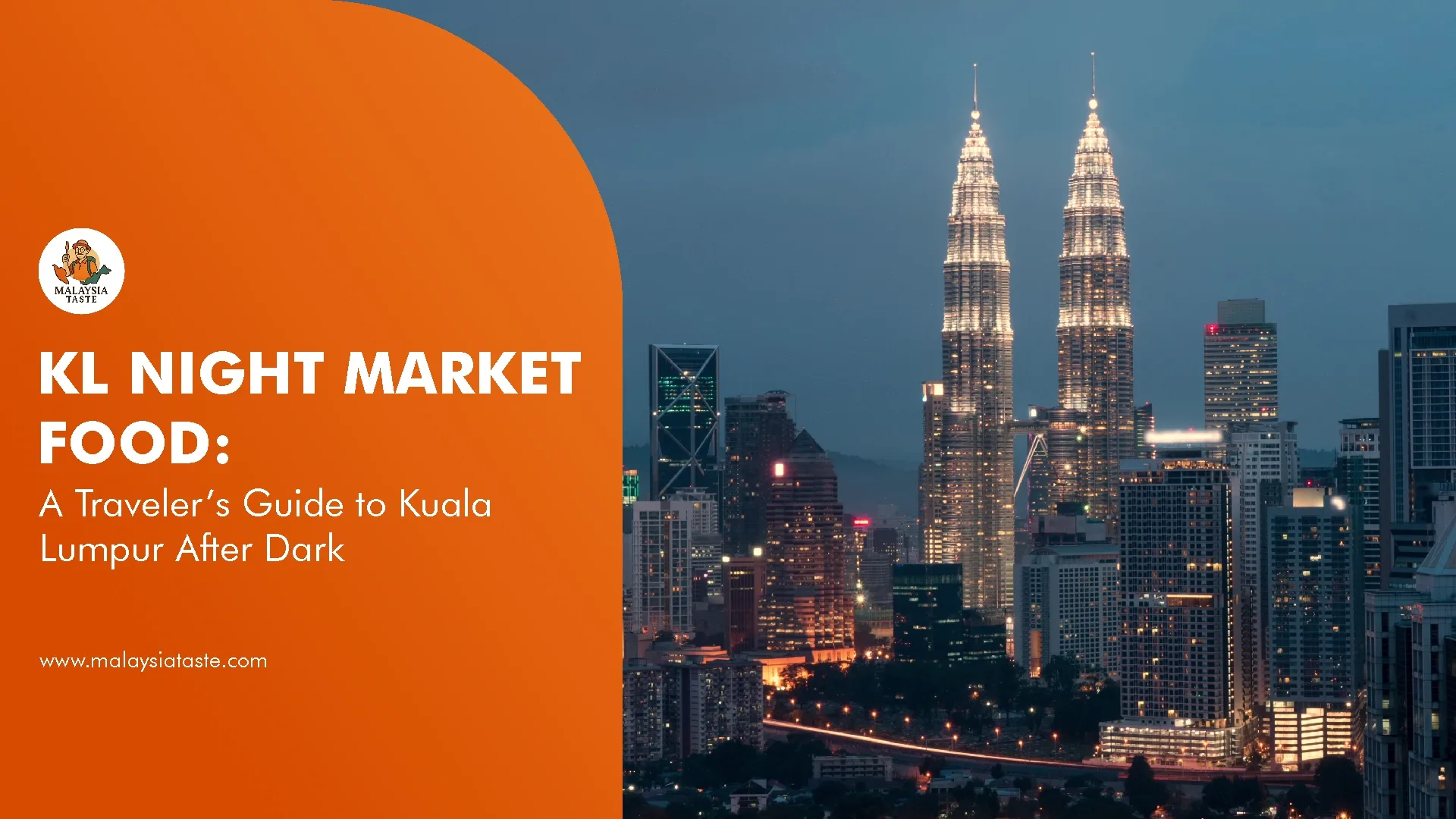
Kuala Lumpur changes after sunset. The heat eases off, the lights turn warm and the air starts to smell of charcoal, garlic, soy sauce, grilled seafood and frying noodles. For a lot of visitors, this is when KL gets interesting.
During the day you have the skyline, the malls, the mosques and the temples. At night the food takes over: friends sharing plates of satay, families ordering noodles and grilled fish, and visitors wandering slowly from stall to stall trying to decide what’s next.
This is our local guide to KL night market food: what to eat, where to go, how to order and how to enjoy a night out in Kuala Lumpur without feeling overwhelmed.
Why KL night market food is worth an evening of your trip
Kuala Lumpur’s food mixes Malay, Chinese, Indian and other Southeast Asian influences, and at a night market you see all of it at once. Dishes can be smoky, spicy, sweet and savoury, sometimes all in the same bite.
Instead of sitting in one restaurant with one menu, you walk, look, compare and taste. One stall grills chicken wings, the next sells satay, and a few steps on there’s char kway teow, curry noodles, fresh fruit juice, cendol or something crispy and fried.
It’s a social way to eat, too. Nobody rushes. People stand around, chat, share, point at whatever looks good and end up ordering more than they planned, which is exactly how you should do it.
KL night market food: what to try first
On your first night the choice can feel endless, so start with dishes that tell you a lot about the city.
Satay
Marinated meat grilled on skewers, usually served with peanut sauce, cucumber, onion and rice cakes. Good satay is smoky and tender with slightly charred edges. The peanut sauce brings sweetness, and the cucumber keeps each mouthful fresh.
If it’s your first night market, satay is an easy place to start. It’s simple to share and to eat while you walk.
How to enjoy satay
Order a few sticks rather than a big plate. Start with chicken or beef and add more once you know you like it. Try one without sauce first so you can taste the marinade and the smoke, then dip.
Char kway teow
Flat rice noodles stir-fried fast in a very hot wok with soy sauce, egg, bean sprouts, chives and prawns, or whatever that stall’s version calls for. What you’re after is wok hei, the smoky flavour you only get when noodles meet intense heat. It’s one reason char kway teow often tastes better from a street stall than in a restaurant.
If you love noodles, put it near the top of your list.
Grilled chicken wings
A night market classic: marinated, grilled and served hot with a glossy, smoky skin. You get crispy edges, juicy meat and a sweet and savoury marinade, so they’re a good pick if you want something familiar that still tastes local.
If you’re filming, the flames and smoke at the wing stalls make great footage.
Hokkien mee
KL-style Hokkien mee is thick yellow noodles fried in dark soy sauce until they’re glossy and almost black. It isn’t the prettiest plate on the table, but the flavour is deep and savoury, and anyone who likes wok-fried noodles tends to remember it.
Curry laksa
Noodle soup in a coconut curry broth, topped with things like tofu puffs, chicken, prawns, fish cake, cockles and bean sprouts, depending on who’s cooking. The broth is creamy, spicy and fragrant, which makes it a good choice when you want something more filling than grilled snacks.
If you’re not used to chilli, ask whether they can make a milder bowl before you order.
Sweet things to try at KL night markets
After the grills and the chilli, you’ll want something sweet and cold. There’s plenty to choose from, and most of it is easy to share.
Cendol
Shaved ice with coconut milk, palm sugar syrup and green jelly strands. The palm sugar tastes almost like caramel, and the coconut milk makes it rich without being heavy. It’s especially good after something spicy.
Ais kacang
Also called ABC, this is a mound of shaved ice with red beans, sweet corn, grass jelly, syrup and condensed milk, sometimes with a scoop of ice cream on top. It’s colourful and a bit over the top, so share one if you still plan to eat more.
Apam balik
A Malaysian folded pancake, usually filled with crushed peanuts, sugar and sometimes sweet corn. Some stalls make it thin and crispy, others thick and fluffy. Either way it’s an easy snack to carry as you walk.
Fresh tropical fruit
Fruit stalls sell mango, watermelon, pineapple, papaya, dragon fruit, rambutan, mangosteen and durian. Fruit makes a nice break between heavier dishes.
Durian is another matter: strong smell, creamy texture, strong opinions. If you’ve never had it, buy a small portion and treat it as an experience rather than dessert. Our guide to Malaysian desserts has more sweet things to look out for.
Best places for night market food in Kuala Lumpur
There are several places to eat at night in KL, and each has its own mood. The right one depends on the kind of evening you’re after.
Jalan Alor
KL’s most famous food street and the easiest starting point for most visitors. It’s just off Bukit Bintang and gets very lively after dark, with restaurants, hawker stalls, grills, seafood, noodles, desserts and drinks along one walkable strip.
Some people find it touristy, but for a first night it’s hard to beat for choice and convenience. Our Jalan Alor food street guide covers what to order, when to go and how to get there.
Best for
- First-time visitors
- Food vloggers
- Anyone staying around Bukit Bintang
- Groups who want lots of choice
- People who like a lively atmosphere
Petaling Street and Chinatown
Petaling Street offers a different kind of night out, with history, old shops, markets, local eateries and a mix of traditional and newer food stops.
Chinatown feels more layered than Jalan Alor. You’ll find noodles, roast meats, snacks, desserts and drinks, plus small places that are easier to appreciate when someone local explains them. See our Petaling Street food guide for where to start.
Best for
- Travellers interested in culture and history
- Food writers looking for stories
- Anyone who enjoys walking through heritage streets
- People who want more than one kind of food experience
Taman Connaught night market
Taman Connaught is often named as one of the bigger night markets in the KL area, with a long run of food, snacks, drinks and market stalls.
It’s further out than Jalan Alor, so it takes more planning, and like most pasar malam it only runs on certain nights of the week, so check before you go. If you want a proper local pasar malam, it’s worth the trip.
Best for
- More adventurous travellers
- Visitors with extra time in KL
- People who want the full night market atmosphere
- Snackers who like trying lots of small things
Kampung Baru night market and food stalls
Kampung Baru is the area to head for if you want Malay food and a more neighbourhood feel. Part of the appeal is the contrast between its village-like streets and the modern skyline right next door.
Look out for nasi lemak, grilled fish, satay, traditional Malay dishes and evening food stalls. As a Malay neighbourhood it’s also an easy area for travellers who eat halal; our guide to halal food in Kuala Lumpur has more ideas.
Best for
- Malay food lovers
- Travellers happy with a less polished experience
- Visitors curious about local neighbourhoods
- Anyone who wants to see a different side of the city
How to explore KL night markets like a local
Night markets are best taken slowly. Don’t stop at the first stall you see. Walk through, notice what people are ordering and let your appetite build.
Walk the whole street first
Before you buy anything, walk from one end to the other. You’ll be able to compare stalls, see what looks fresh and work out what you actually want.
Order small portions
There’s a lot to try, so go easy at the first stop. Order small and share with your group, and you’ll taste far more before you’re full.
Follow the smoke and the queue
Busy grills, hot woks and a steady stream of customers are usually a good sign. Don’t go by the queue alone, though. Watch how fast the food moves, whether the ingredients look fresh and whether it’s something you’d enjoy.
Ask about spice
Dishes with sambal, chilli sauce or curry can be hot. If you’re not sure, ask for less spicy or for the sauce on the side. A few phrases that help:
- “Less spicy, please.”
- “No chilli, please.”
- “Sauce on the side, please.”
- “What’s your most popular dish?”
Bring cash
Plenty of places take digital payments, but cash is still handy at smaller stalls. Carry small notes so paying is quick.
Stay open-minded
Some dishes will look unfamiliar, and that’s half the fun. Start with small bites, ask questions and don’t put pressure on yourself to love everything.
Tips for food vloggers and bloggers
Night markets are great for content, with movement, sound, colour and flavour all in one place. The best posts and videos give people a feel for being there as well as a look at the food.
Film the cooking
Satay on the grill, noodles tossed in the wok, sauces being poured, desserts built up in layers. Those are the moments that let your audience feel the energy of the market.
Capture natural sound
Sizzling oil, chopping, orders being called, laughter and traffic all add atmosphere. Don’t bury everything under music; often the real sound is what makes a clip work.
Ask before filming faces
Filming food and general street scenes is usually fine, but if you want close-ups of a vendor, ask first. A little courtesy goes a long way.
Take notes as you go
Write down dish names, where you ate them, what was in them and your first impressions. After a dozen tastings the details start to blur.
Tell the story
“This is delicious” doesn’t tell anyone much. Say why. Was it smoky, spicy or sweet? Was the texture a surprise? Did the vendor recommend it? Those details make your post or video useful.
Is KL night market food safe for tourists?
Most visitors eat at KL night markets without any trouble, but it pays to be sensible. Choose stalls where food is cooked fresh, skip anything that looks like it has been sitting out a while, and keep drinking water through the evening.
Practical food safety tips
- Choose busy stalls with fast turnover.
- Go for food that’s freshly cooked in front of you.
- Be careful with raw or undercooked items.
- Use hand sanitiser before you eat.
- Carry tissues or wet wipes.
- Drink bottled water if you’re unsure.
- Don’t eat too much too quickly, especially the spicy dishes.
If you have allergies, ask clearly about ingredients. Depending on the dish, Malaysian food can contain peanuts, seafood, egg, soy, dairy, wheat or tree nuts.
Why a guided food tour helps
Exploring on your own is fun. A guided food tour makes it easier, especially on a first visit. A local guide can tell you what each dish is, how to order it, which stalls are worth your time and how Kuala Lumpur’s different communities shaped what’s on the plate. Night markets get busy and menus aren’t always clear, so that context helps.
If you’re short on time it saves energy, too. You follow a planned route and spend the evening eating instead of deciding.
A food tour makes sense if you want to:
- Try lots of dishes in one night
- Skip the guesswork
- Hear the stories behind the food
- Find the stalls locals go back to
- Understand the Malay, Chinese and Indian influences on KL food
- Get better material for your blog or videos
Our Jalan Alor food tour runs every evening at 6pm, 7pm and 8pm, with 12 or more tastings over two and a half to three hours, led in English by MOTAC-registered guides. If you’d like to start a little earlier, the Masjid Jamek food walk sets off at 4pm, 5pm or 6pm and finishes in Chinatown as the evening gets going.
A simple KL night market food itinerary
Only have one evening? Here’s how we’d pace it.
Early evening: start light
Walk the market or food street first. Have a fresh juice, a small snack or a grilled skewer while you look around.
Dinner: choose your main dishes
Pick two or three heavier dishes, such as char kway teow, Hokkien mee, grilled seafood, satay or curry laksa, and share them if you’re with friends or family.
After dinner: dessert
Cool down with cendol, ais kacang, apam balik or some fresh fruit.
Last stop: slow down
Before you head back, give yourself a few minutes to stand and watch the street. The atmosphere is as much a part of the night as the food.
Common mistakes at KL night markets
Even experienced travellers slip up on these.
Ordering too much too early
It’s tempting to buy everything at the first few stalls, but you’ll be full before you’ve seen the best of it. Walk first, then decide.
Only chasing famous dishes
The well-known dishes are worth trying, but leave room for surprises. Sometimes the best bite of the night is a snack you never planned to order.
Forgetting the drinks
Fresh sugarcane juice, iced tea, local coffee and fruit juice all help with the heat and the chilli.
Expecting restaurant service
Night markets are casual and fast. Be patient, keep your order clear and enjoy the informality.
Not carrying small notes
Small notes make paying much easier when the stalls are busy.
Make KL night market food part of your trip
Start with satay, chicken wings, char kway teow, Hokkien mee or curry laksa. Later in the night, move on to cendol, ais kacang, apam balik, fruit or whatever catches your eye. Along the way you’ll hear the woks, smell the charcoal and see families sharing dishes all around you.
So when the sun goes down in KL, don’t head straight back to your hotel. Follow the lights and the sound of the grills, and if you’d like a local to show you around, have a look at our Kuala Lumpur food tours.
2 Comments
Leave a Comment