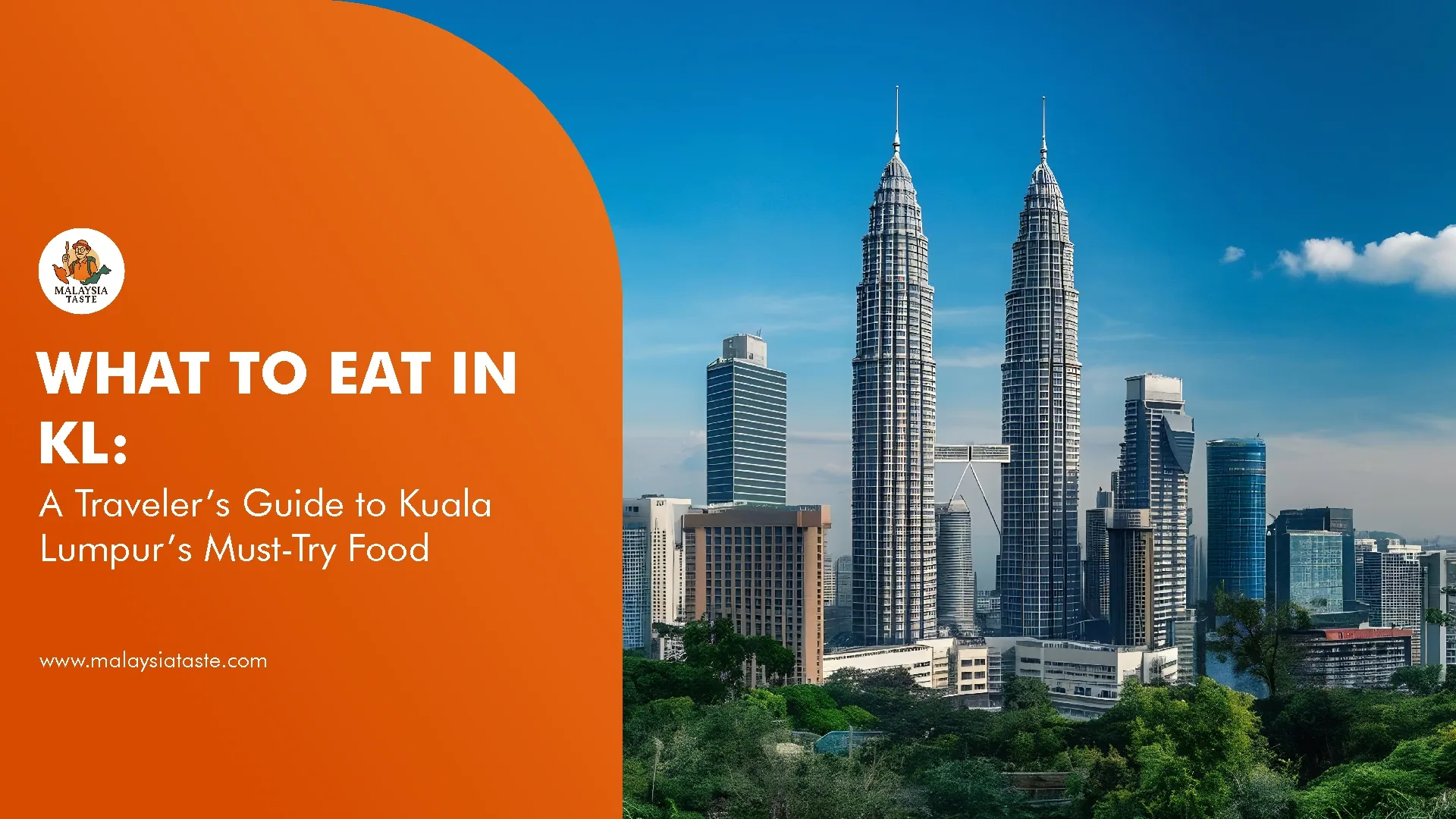
Ask us what to eat in KL and we usually answer with a question: what time is it? Kuala Lumpur eats differently at 8am than it does at 10pm. Mornings belong to nasi lemak and roti canai, hot afternoons call for something icy, and evenings are for the charcoal grills and woks of Jalan Alor.
Below are the 20 dishes we’d put in front of any first-time visitor to Kuala Lumpur, grouped roughly by time of day, followed by the neighbourhoods where each one is easiest to find. We’re locals, so you’ll find a few opinions along the way.
What food is Kuala Lumpur famous for?
If you only have a day or two, start with nasi lemak, roti canai with a glass of teh tarik, char kway teow, satay and cendol. Between them you get coconut rice and sambal, flaky bread with curry, smoky wok-fried noodles, meat straight off the grill and a cold dessert that makes the heat bearable.
KL’s food comes from Malay, Chinese and Indian kitchens that have been cooking side by side for generations, so it pays to branch out once you’ve covered those five. Laksa, banana leaf rice and the dark, glossy Hokkien mee the city is known for are good next steps. For the bigger picture, our guide to Malaysian cuisine explains how the different traditions fit together, and traditional Malaysian food goes deeper into individual dishes.
Breakfast in KL: where most locals start
Breakfast is the meal Malaysians take most seriously, and it’s also the cheapest way into the food. You’ll eat most of these at a mamak restaurant (an Indian Muslim eatery, many of which stay open late) or a kopitiam, the old-style coffee shop.
1. Nasi lemak
Rice cooked with coconut milk and pandan leaves, served with sambal, fried anchovies, roasted peanuts, cucumber and a boiled egg. Many stalls add fried chicken, beef rendang, squid sambal or curry on the side. The sambal is what people remember: sweet first, then the heat arrives a second later, and the cucumber is there to calm things down.
It’s a breakfast dish for most Malaysians, though you can find it all day, wrapped in paper at roadside stalls or piled onto a plate with fried chicken. In Kampung Baru, Nasi Lemak Antarabangsa has been a KL favourite for decades and is especially lively at night.
2. Roti canai
A flaky flatbread stretched paper thin, folded, then cooked on a hot griddle and served with dhal or curry. Crisp outside, soft and layered inside. If you’re nervous about spice, this is the easiest place to start: dip it in the dhal first, then move on to the curries.
Once you’ve had a plain one, order a variation:
- Roti telur, with egg
- Roti bawang, with onion
- Roti pisang, with banana
- Roti tisu, thin, crisp and often sweet
- Roti bom, thicker, sweeter and buttery
- Roti banjir, “flooded” with curry, for when you’re properly hungry
3. Teh tarik
Pulled milk tea, poured back and forth between two mugs from a height until it’s frothy on top and smooth underneath. It goes with almost everything on this list, from roti canai in the morning to a late-night snack. It’s sweet by default, so ask for it “kurang manis” if you’d like less sugar.
4. Kaya toast and soft-boiled eggs
The kopitiam classic: toast spread with kaya, a coconut and egg jam, plus a slab of butter, served with two soft-boiled eggs that you season with soy sauce and white pepper. Order a kopi (local coffee) alongside. Our guides to kopitiams in Kuala Lumpur and Malaysian breakfast food cover what to order and how.
Noodles to try in Kuala Lumpur
5. Char kway teow
Flat rice noodles fried hard and fast with prawns, cockles, egg, bean sprouts, Chinese sausage and soy sauce. The dish has Penang roots, but KL has plenty of good versions. What you’re after is wok hei, the smoky flavour that only comes from a very hot wok and a cook who knows exactly when to stop. Our guides’ rule of thumb: look for someone who has clearly been working the same wok for years, with a queue in front of them.
6. KL Hokkien mee
Thick yellow noodles cooked in dark soy sauce with pork, prawns and cabbage, finished with crispy pork lard. It looks plain and almost black on the plate, and it’s one of the most satisfying things you can eat in the city, especially late at night. Don’t confuse it with Penang Hokkien mee, which is a prawn noodle soup. KL’s version contains pork, so it isn’t halal.
7. Curry laksa (curry mee)
A noodle soup in a rich coconut curry broth, usually with tofu puffs, fish cake, cockles, chicken, prawns or bean sprouts depending on the stall. In KL many people simply call it curry mee. The broth is the point here, creamy and spicy at the same time, and Chinatown is a good place to try it.
8. Asam laksa
The sour cousin of curry laksa. The broth is made with tamarind and fish, usually mackerel, and served over thick rice noodles with herbs, onion and pineapple. If you like sharp, tangy food, this might end up being your favourite bowl of the trip.
Rice and curry dishes
9. Banana leaf rice
A South Indian-style meal where rice is served on a banana leaf with vegetable sides, curries, pickles and papadum, and you add fried chicken, fish or mutton curry if you like. Eat with your right hand if you’d like to do it the traditional way, or ask for cutlery, which is perfectly normal. When you’re done, folding the leaf towards you is the polite way to say you enjoyed it. Brickfields is the place to go, and since many of the sides are vegetable dishes, it works well for vegetarian travellers too.
10. Nasi kandar
Rice with your choice of curries and sides, finished with kuah campur, a mix of curry gravies poured over the top. Fried chicken, fish curry, squid, okra, cabbage and boiled egg are common picks. It’s bold, heavy and best for anyone who enjoys strong spices. Look for it at mamak restaurants.
11. Beef rendang
Beef slow-cooked with coconut milk, spices and aromatics until the sauce has almost disappeared and the meat is tender and deeply flavoured. Rendang is a festive dish, but you’ll often see it as a side with nasi lemak or at Malay rice stalls.
12. Hainanese chicken rice
Poached or roasted chicken served with rice cooked in chicken stock and a sharp chilli sauce, often with a bowl of clear soup on the side. It’s simple, comforting and a good choice if you want a break from spice. Chinatown around Petaling Street has several places that serve it.
13. Claypot chicken rice
Rice and chicken cooked together in a clay pot over charcoal, with Chinese sausage and dark soy sauce. The best part is the crispy crust at the bottom of the pot. It’s cooked to order, so expect to wait a little, and it’s a good one to share.
Street food and night snacks
14. Satay
Skewers of marinated chicken or beef, sometimes lamb, grilled over charcoal and served with peanut sauce, cucumber, onion and compressed rice cakes. A good skewer is smoky, a little charred and still juicy. Satay is easy to share, so order a handful of sticks for the table. Kajang, just outside Kuala Lumpur, is famous for it, and you’ll find plenty of grills on Jalan Alor too.
15. Grilled chicken wings
A Jalan Alor favourite. Wings are marinated in something sweet and savoury, then grilled over an open flame until sticky and charred at the edges. Wong Ah Wah has been known for them for decades, and a plate with a cold drink is a very good way to start an evening on the street.
16. Burger Ramly
Malaysia’s own street burger: a beef or chicken patty wrapped in a thin omelette and loaded with sauces, cooked on a flat grill at roadside stalls in the evening. It’s messy, cheap and exactly what locals want after a night out.
Desserts for a hot afternoon
17. Cendol
Shaved ice with coconut milk, gula melaka (palm sugar syrup), red beans and green rice-flour jelly flavoured with pandan. It’s creamy, icy and slightly smoky from the palm sugar. You’ll find good cendol in Chinatown and in Kampung Baru, and on a hot afternoon it’s exactly what you need.
18. Ais kacang
Also called ABC, this is shaved ice piled with red beans, sweet corn, grass jelly, coloured syrup and condensed milk, sometimes with ice cream on top. It’s bright, a bit silly and very Malaysian. Order one bowl to share first; you can always get a second.
19. Apam balik
A folded pancake filled with crushed peanuts, sugar and sometimes sweet corn. Some stalls make them thin and crispy, others thick and fluffy, and both are worth trying. It’s the perfect snack to eat while walking through a night market.
20. Kuih
Bite-sized traditional sweets made with rice flour, coconut and pandan. Two easy ones to start with are onde-onde, chewy glutinous rice balls filled with palm sugar and rolled in grated coconut, and kuih lapis, a steamed cake built up in colourful layers. Pick a few at a market stall and share them. There’s much more in our guide to Malaysian desserts.
Where to eat in KL, neighbourhood by neighbourhood
Knowing what to order is half of it. The other half is knowing where to go, because each part of the city leans towards different food.
Jalan Alor and Bukit Bintang
KL’s best-known food street, a few steps from the Bukit Bintang shopping area. It comes alive in the evening and gets busier as the night goes on, with grilled seafood, satay, noodles, chicken wings, desserts and fresh juices all within a short walk. It’s popular with visitors, so compare menus and prices before you sit down. Our Jalan Alor street food guide and guide to KL night market food have more detail, and if you’re staying near the twin towers, see Malaysian food near Petronas.
If you’d like a local to choose the stalls, our Jalan Alor food tour starts at 6pm, 7pm or 8pm and runs for two and a half to three hours, with 12 or more tastings, including dishes like char kway teow, satay, roti canai, nasi lemak and cendol.
Chinatown and Petaling Street
Older and slower than Jalan Alor, with kopitiams, noodle shops, roast meats, chicken rice, curry mee, traditional drinks and desserts tucked into the side streets. It’s a good area to explore by day. Our Petaling Street food guide lists what to look for, and our Petaling Street food tour runs at 10am, 11am, 3pm or 4pm for three to four hours, taking in Kwai Chai Hong along the way.
Masjid Jamek
This is where Kuala Lumpur began, at the meeting of two rivers now known as the River of Life. Our Masjid Jamek food walk starts at Masjid Jamek LRT station at 4pm, 5pm or 6pm, passes the Sultan Abdul Samad Building and finishes in Chinatown about two hours later, with light bites and sweet treats along the way. It’s the shortest of our walks and a nice way to see the old city before dinner.
Kampung Baru
A Malay neighbourhood right in the middle of the city, with nasi lemak, grilled fish, traditional Malay dishes and plenty of night-time food. It shows you a side of KL that has nothing to do with malls, and it’s home to Nasi Lemak Antarabangsa.
Brickfields
KL’s Little India and the place for Indian Malaysian food: banana leaf rice, curries, thosai, biryani, Indian sweets and lots of vegetarian dishes. If you’re visiting around Deepavali, our Deepavali in Kuala Lumpur guide has tips for the festive season.
Chow Kit
For early risers, the wet market at Chow Kit is a busy, noisy look at everyday KL, and the stalls nearby serve roti canai and breakfast to people heading to work. Go in the morning, wear shoes you don’t mind getting splashed, and keep your bag close in the crowds.
How to order and eat like a local
Eating out in KL is casual, and nobody expects visitors to know the rules. A few habits will still make things easier.
Follow the busy stalls. A queue of locals usually means the food is good and turning over quickly, which keeps it fresh. At kopitiams and hawker centres, drinks are often ordered separately from food, from someone who comes to your table, so don’t worry if two people take your order.
Share as much as you can. Most dishes are easy to split, and ordering several plates for the table lets you try far more in one meal. If you’re not used to chilli, ask for the sambal on the side so you can add it yourself.
Carry some cash in small notes. Plenty of places take e-wallets and cards now, but smaller stalls still prefer cash. And if you’re eating banana leaf rice or nasi kandar with your hands, use your right hand.
If you eat halal, remember that some Chinese dishes, including KL Hokkien mee, use pork; our guide to halal food in Kuala Lumpur helps you find certified places. For more on hawker culture across the country, see the best street food in Malaysia.
A one-day KL food plan
If you only have one day, this is roughly how we’d spend it:
- Morning: nasi lemak or roti canai with teh tarik, in Kampung Baru or at a mamak near your hotel.
- Lunch: banana leaf rice in Brickfields, or a bowl of curry laksa in Chinatown.
- Afternoon: cendol or ais kacang, then a rest somewhere air-conditioned while the heat peaks.
- Evening: Jalan Alor for satay, chicken wings and char kway teow.
- Late: roti canai and another teh tarik at a mamak, or a Burger Ramly from a roadside stall.
Pace yourself. Portions are often small, which makes it easy to try more, and some of the best things you’ll eat are the ones you didn’t plan for.
Eat your way through KL with a local
If you’d rather someone else did the ordering, that’s what our food walks are for. Every tour is led in English by MOTAC-registered guides who can tell you what’s in each dish and why Malaysians love it. Browse our Kuala Lumpur food tours, read how to choose a food tour in Kuala Lumpur if you’re deciding between them, and check what to bring before you go.
However you do it, come hungry and keep a note of the dishes you liked. You’ll want to order them again before the trip is over.
2 Comments
Leave a Comment