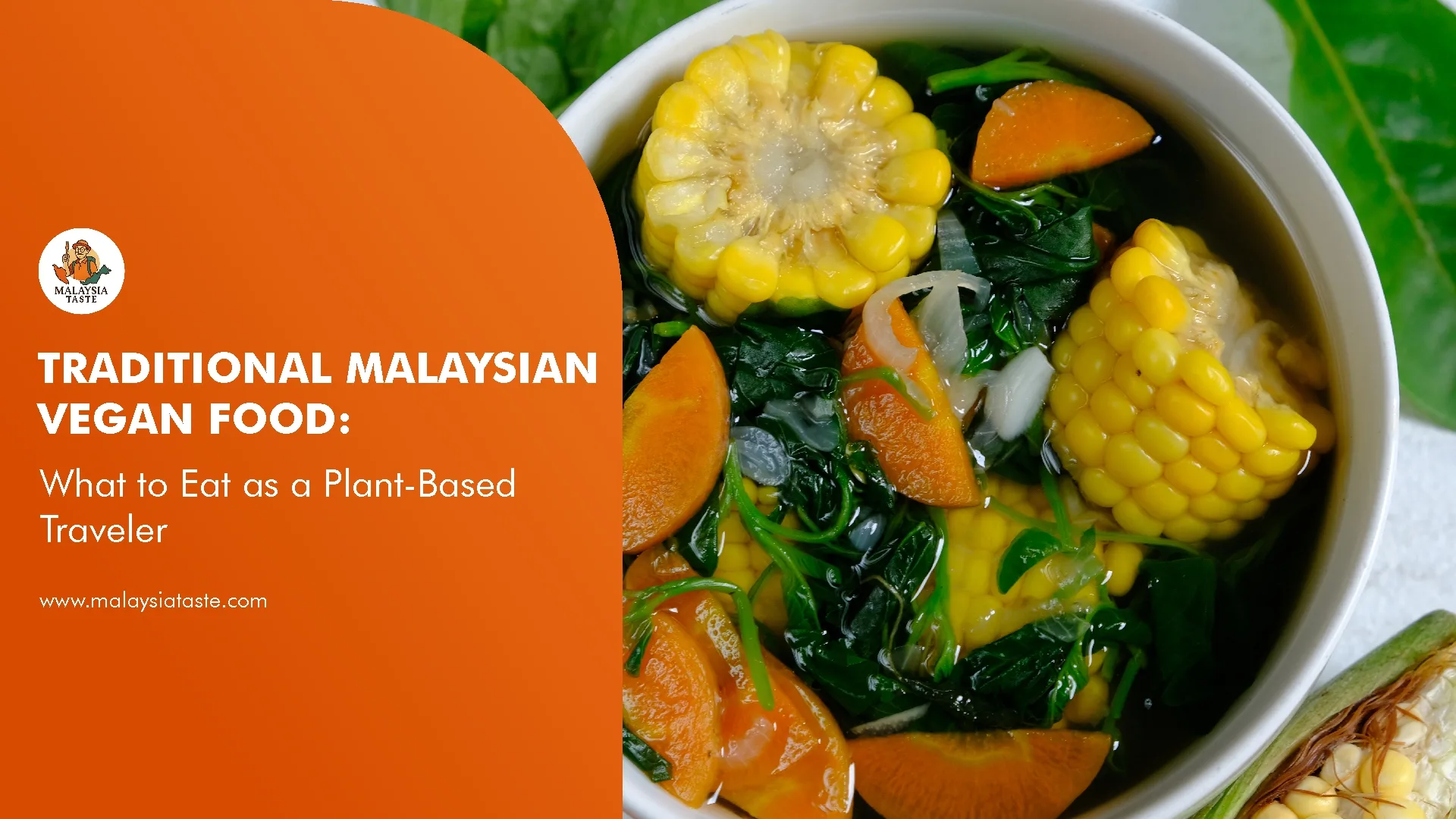
Vegan Malaysian food takes a little know-how, but there’s more of it than most visitors expect. Plenty of our classic dishes are built on rice, coconut milk, tofu, tempeh and vegetables, so the base is often plant-based already. The catch is in the details: shrimp paste in the sambal, anchovies on the side, ghee in the flatbread.
Here’s how we’d approach traditional Malaysian food as a vegan: the dishes to look for, the hidden ingredients to ask about and a few phrases for ordering. If you eat dairy and egg, our list of vegetarian Malaysian dishes gives you even more choice.
Why Malaysian cuisine works for vegans
Three food cultures with plant-based traditions
Malaysian food draws on Malay cooking, rich in herbs and coconut milk, on Chinese Buddhist vegetarian cooking, and on South Indian vegetarian cooking. Between them, many dishes are plant-based as they come and many more can be adjusted.
Flavour that doesn’t depend on meat
Lemongrass, turmeric, chilli, spices and coconut milk carry most of the flavour, so a vegetable curry or a plate of spiced tempeh feels like a proper meal.
Traditional Malaysian food for vegans: dishes to look for
Vegetarian restaurants make vegan versions of most of these. At a regular stall, the note under each dish tells you what to ask.
1. Vegan nasi lemak
Malaysia’s national dish is coconut rice with sambal, peanuts and cucumber. The standard plate adds anchovies and egg, and the sambal usually contains shrimp paste. Vegetarian restaurants use a plant-based sambal with fried tofu or tempeh, and it tastes very close to the original.
2. Vegan laksa
Most laksa broths get their depth from shrimp paste, dried shrimp or fish. Vegan versions use a vegetable broth with tofu and mushrooms and keep the coconut, chilli and tang. Order this one from a vegetarian kitchen.
3. Mee goreng (vegan fried noodles)
Stir-fried noodles with vegetables, tofu and soy-based sauces. Mamak stalls usually add egg and often prawns, so ask for it without and check the chilli paste for shrimp.
4. Tahu sumbat (stuffed tofu)
Fried tofu stuffed with crunchy vegetables and served with peanut sauce. It’s light, filling and good as a snack. Ask about the sauce, as some cooks add shrimp paste.
5. Nasi campur (mixed rice), vegan style
You take rice and choose from a counter of cooked dishes, so you can see everything. Pick vegetable curries, stir-fried greens, tofu and tempeh, and ask about shrimp paste in anything red and spicy. At Chinese vegetarian stalls, the whole counter is meat-free.
6. Tempeh kunyit (turmeric tempeh)
Tempeh rubbed with turmeric and fried until crisp. It’s aromatic, crunchy and one of the best things on a mixed-rice counter. Some cooks toss it with anchovies, so check.
7. Roti canai with vegetable curry
The flaky mamak flatbread, served with lentil or vegetable curry. It isn’t automatically vegan, because the dough often contains ghee, margarine or condensed milk. Ask, or order thosai (a crisp rice and lentil crepe) at a South Indian vegetarian restaurant, without ghee.
8. Popiah (fresh spring rolls)
A soft wrapper rolled around braised jicama, lettuce and sweet sauce. Many stalls add egg or prawns, so it’s vegan only when the filling is all vegetables, which is how vegetarian stalls make it.
Vegan Malaysian desserts you should try
Coconut milk, palm sugar and rice flour do most of the work in Malaysian sweets. Our guide to Malaysian desserts has more.
Cendol
Shaved ice, coconut milk, palm sugar syrup and green pandan jelly. The basic bowl is usually plant-based, so skip extra toppings like ice cream.
Bubur kacang hijau (mung bean dessert)
Mung beans simmered in coconut milk and served warm. Comforting and usually vegan.
Traditional kuih (local snacks)
Bite-size cakes made from rice flour, coconut milk and palm sugar. Many are vegan, but some use egg or butter (the custard layer on kuih seri muka contains egg), so ask.
Hidden non-vegan ingredients to watch out for
A plate that looks like rice and vegetables can still contain:
- Belacan (shrimp paste), in sambal and many vegetable stir-fries
- Dried shrimp and dried anchovies (ikan bilis)
- Fish sauce and oyster sauce
- Ghee and butter, especially in Indian breads and sweets
- Egg, in noodles, fried rice and kuih
- Condensed milk, in teh tarik and most local drinks
If you’re unsure, ask the vendor before they start cooking.
How to eat vegan like a local in Malaysia
Visit South Indian vegetarian restaurants
Thosai, idli and vegetable curries come from meat-free kitchens. Say you don’t eat dairy, since ghee and yoghurt are common.
Explore Buddhist vegetarian eateries
These cook without meat or fish, often buffet style, with tofu and mock meats. Look for 素 or 斋 on the signboard.
Go for nasi campur
Pointing at what you want beats decoding a menu.
Learn simple phrases
- Saya tak makan daging: I don’t eat meat
- Tak nak ikan, tak nak udang: no fish, no prawns
- Jangan letak belacan: please don’t add shrimp paste
- Tak nak telur: no egg
Many cooks take “vegetarian” to mean no meat, so naming what you don’t eat avoids surprises.
Best places to find vegan Malaysian food
Kuala Lumpur
KL has the widest choice, from Indian vegetarian restaurants in Brickfields to newer plant-based restaurants. Our guide to vegetarian food in Malaysia covers where to go.
Penang
Known for street food, with more vegan versions of local favourites appearing.
Melaka
Traditional dishes here lean on shrimp paste, but vegetarian restaurants make vegan-friendly versions.
How vegan Malaysian cuisine is changing
More restaurants now offer plant-based versions of classic dishes, some chefs make vegan rendang and sambal, and demand keeps growing.
Eating vegan with us in Kuala Lumpur
Eating vegan here means asking a few questions, and the answers tell you a lot about how Malaysian dishes are made. Our custom food tour lets you set preferences such as vegetarian. If you’re vegan, tell us exactly what you don’t eat before you book, and we’ll let you know honestly what we can arrange.
1 Comment
Leave a Comment