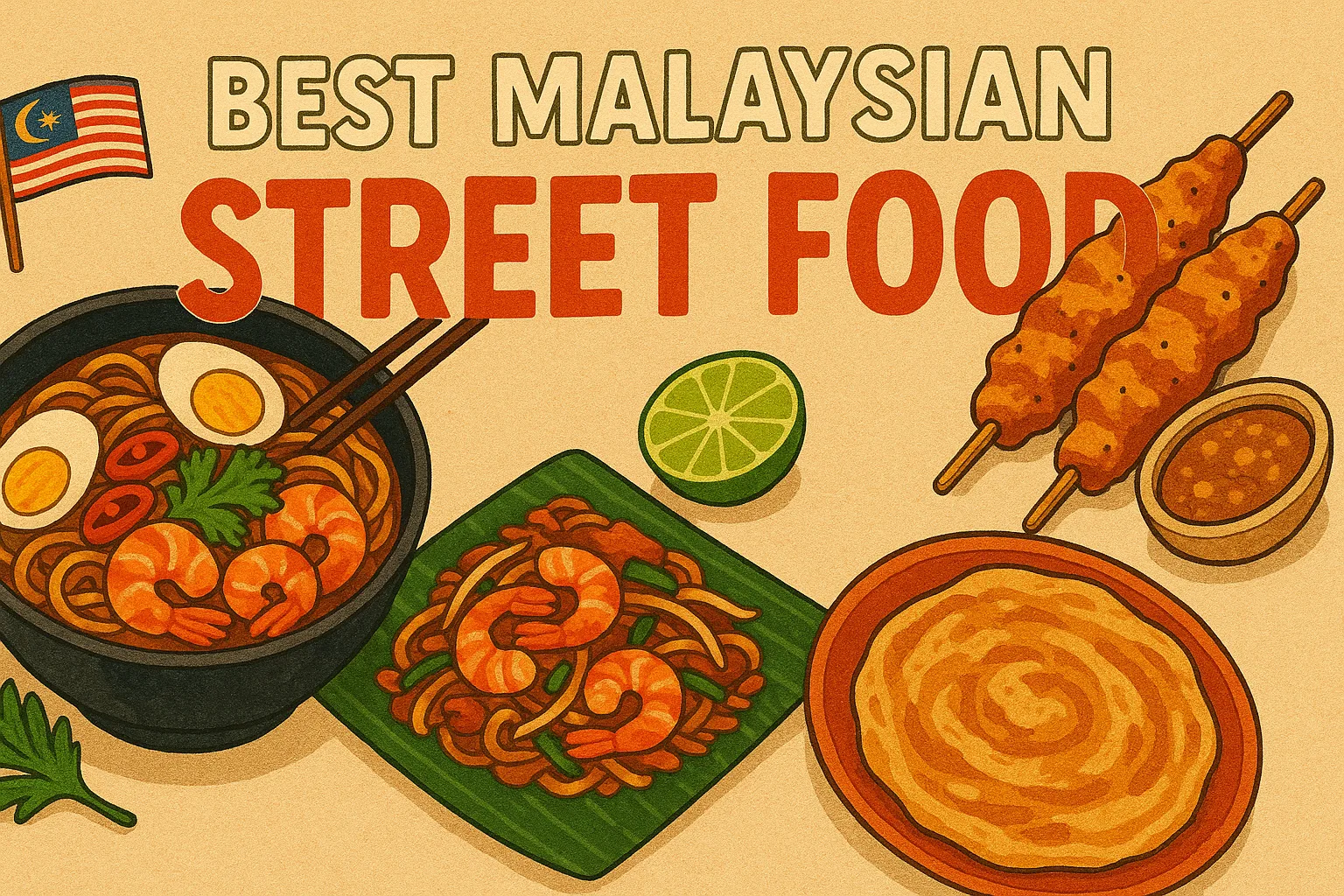
Ask ten Malaysians where to find the best street food in Malaysia and you’ll get ten different answers, most of them delivered with total conviction. That’s half the fun. Street food here is everyday food: a plate of nasi lemak before work, a bowl of laksa at lunch, satay and a cold drink at a plastic table once the sun goes down. It’s cheap, it’s cooked in front of you, and it borrows from Malay, Chinese and Indian kitchens, often in the same meal.
We’re a Kuala Lumpur food tour team, so we eat a lot of it. Below are the dishes we’d point a first-time visitor towards, the streets and hawker centres where you’ll find them, and a few habits that make eating at a hawker stall easier.
What makes Malaysian street food different?
Most of it comes from small stalls that do one or two dishes and have done them for years, sometimes across generations of the same family. You’ll find them in three main settings: open-air food streets like Jalan Alor, hawker centres where dozens of stalls share one big seating area, and the weekly pasar malam (night market) that pops up in a car park or side street in almost every neighbourhood.
Flavours tend to be layered. One plate can be spicy, sweet, sour and salty at once, with sambal, lime or pickles on the side so you can adjust it yourself. Prices are low compared with restaurants, and many stalls still prefer cash.
Malaysian street food dishes to try first
You could spend a month here and not get through everything. These are the dishes we’d start with, grouped roughly by how you’ll meet them.
Rice dishes
Nasi lemak is the closest thing Malaysia has to a national dish. Rice cooked in coconut milk comes with sambal (chilli paste), crispy anchovies, peanuts, cucumber and a boiled or fried egg. It’s sold as breakfast, but you’ll see people eating it at every hour.
Nasi kandar started in Penang. You pick a plate of rice, then choose curries and sides from a long counter. The fun part is asking for the gravies to be mixed over the rice, which locals call banjir (flooded).
Hainanese chicken rice is simple and very good when done well: poached or roasted chicken, rice cooked in chicken stock and fat, a sharp chilli sauce and a small bowl of clear soup.
Nasi goreng kampung is village-style fried rice with anchovies, egg, greens and a good spoonful of sambal, cooked hot enough in the wok to pick up a smoky edge.
Noodles
Char kway teow is flat rice noodles fried over high heat with prawns, egg, Chinese sausage and bean sprouts. The smoky flavour from a very hot wok is called wok hei, and it’s what separates a good plate from a forgettable one. Penang’s version is the famous one, but KL has plenty of stalls that do it well.
Laksa comes in two main styles. Curry laksa has a rich coconut and curry broth with noodles, tofu puffs and prawns or chicken. Asam laksa, a Penang favourite, is sour and spicy, built on tamarind and mackerel with mint and torch ginger flower on top. Try both and pick a side.
Hokkien mee means two different dishes depending on where you are. In Penang it’s a spicy prawn noodle soup (prawn mee). In Kuala Lumpur it’s thick yellow noodles fried in dark soy sauce with pork lard and seafood. Both are worth ordering.
Mee goreng is fried yellow noodles with tofu, egg, vegetables and chilli, often from mamak (Indian Muslim) stalls. It’s a reliable late-night plate almost anywhere.
Grilled, fried and snacky
Satay is skewered meat, usually chicken or beef, grilled over charcoal and served with peanut sauce, cucumber and onion. Follow the smoke and you’ll find it.
Murtabak is a thin dough folded around minced meat, egg and onion, then fried on a griddle until crisp and served with curry sauce and pickled onions.
Ikan bakar is whole fish or stingray coated in spice paste, often wrapped in banana leaf and grilled over an open flame.
Rojak has two very different versions. Fruit rojak mixes pineapple, cucumber, jicama and other fruit in a sticky, sweet and spicy sauce. Indian rojak (also called pasembur) is fried fritters, potato, egg and tofu under a thick, spicy peanut sauce.
Pisang goreng, banana fritters, are the easiest snack to love. You’ll smell them before you see them.
Something sweet
Cendol is shaved ice with coconut milk, palm sugar syrup (gula melaka) and green rice flour jelly. After a spicy meal in the heat, it makes complete sense. Our guide to Malaysian desserts has more sweet things to look for.
Durian, the king of fruits, is sold at roadside stalls and markets in season. The smell is strong and divisive, the flesh rich and custardy. Eat it at the stall, because most hotels don’t allow it inside.
Regional specialities worth looking for
Some dishes are tied to one state but turn up at KL stalls and markets. Nasi kerabu from Kelantan is rice tinted blue with butterfly pea flower, served with fresh herbs, salted egg, fried fish and crackers. Mee bandung Muar from Johor is yellow noodles in a thick, spicy broth made with dried shrimp, chilli and shrimp paste. Ketupat sotong is squid stuffed with glutinous rice and simmered in coconut milk and palm sugar, so it lands somewhere between savoury and sweet. If you’re feeling brave, satay made from beef lung (satay paru) is grilled with lemongrass and spices and has a loyal following.
For more on the classics, including where they come from, see our guide to Malaysian traditional food.
Where to eat street food in Malaysia
Every town has its favourite spots, but these are the places most visitors start with.
Jalan Alor, Kuala Lumpur
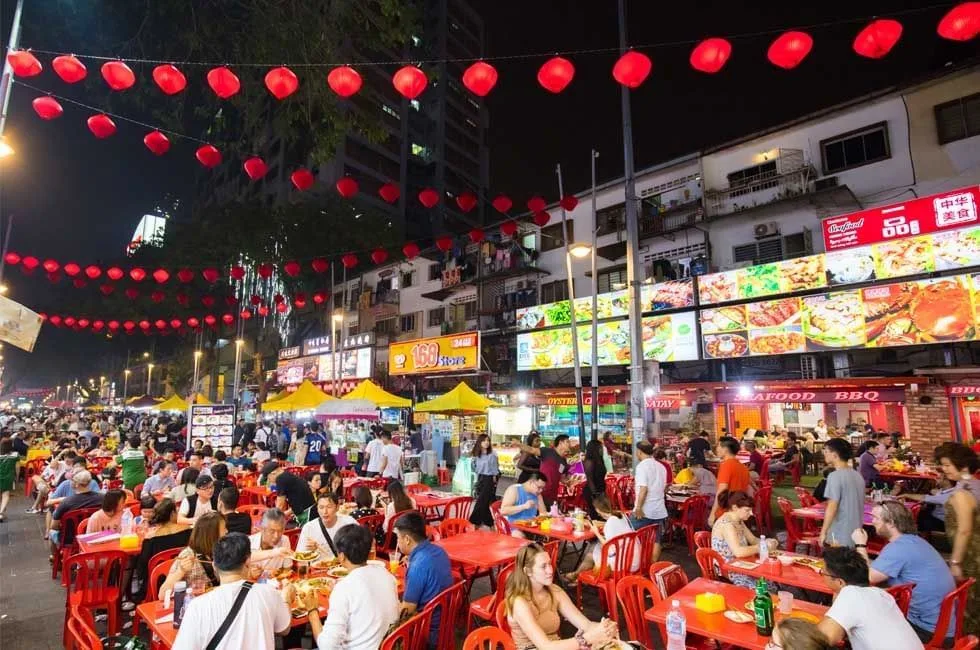
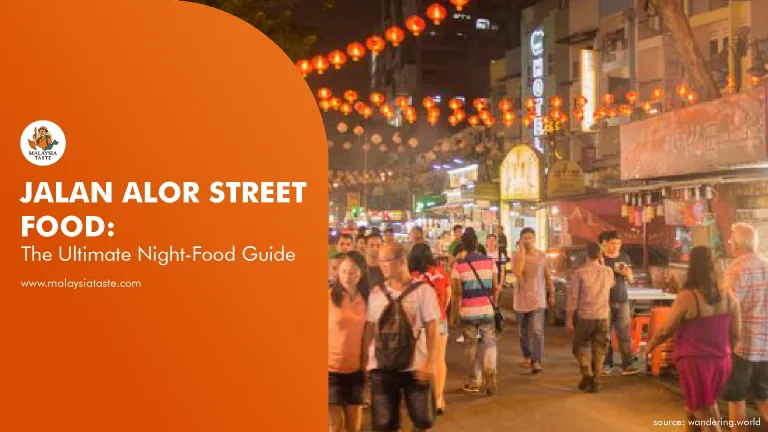
Jalan Alor in Bukit Bintang is probably the best-known food street in the country. Once evening comes, tables spill onto the road and stalls fire up grills and woks for satay, seafood, char kway teow and, in season, durian. It’s busy and loud, which is exactly the point. Our Jalan Alor street food guide covers what to order and when to go.
Petaling Street and Chinatown, Kuala Lumpur
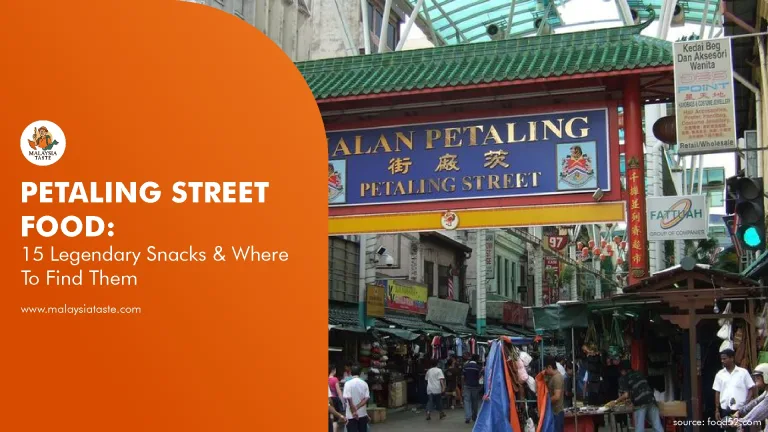
A short ride away, Chinatown packs a lot into a few lanes: KL-style Hokkien mee, claypot chicken rice, curry laksa in Madras Lane and cold longan tea under the covered arcade. It works by day as well as at night. See our Petaling Street food guide for 15 things to eat there.
Gurney Drive Hawker Centre, Penang
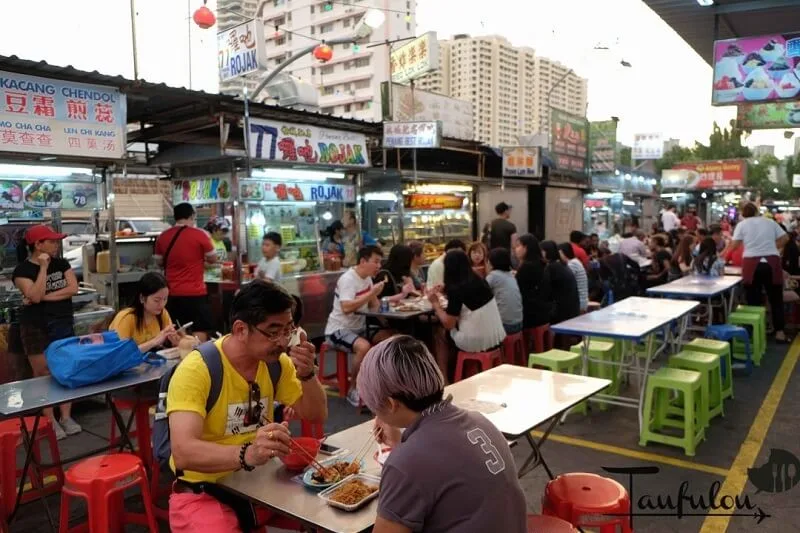
Penang has a reputation as Malaysia’s street food capital, and George Town’s hawker centres are the reason. Gurney Drive is one of the best known, with asam laksa, Hokkien mee (the prawn soup kind), char koay teow and cendol all within a few steps of each other. Portions are generous, so share plates and try more.
Jonker Street Night Market, Melaka
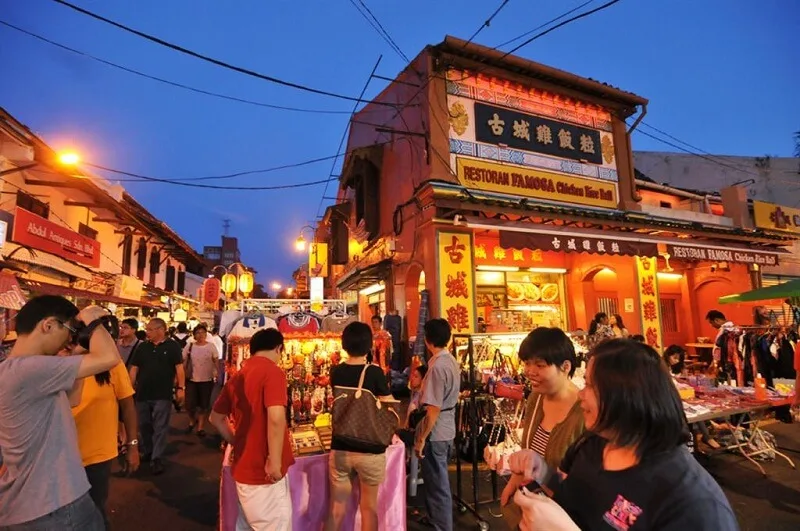
In Melaka, the weekend night market on Jonker Street mixes old shophouses with food stalls. Look for chicken rice balls, a Melaka speciality where the rice is shaped into small rounds, and finish with a bowl of cendol sweetened with gula melaka, the palm sugar named after the state.
Night markets everywhere
You don’t need a famous address to eat well. The local pasar malam runs on a set night each week in most neighbourhoods, with snacks, drinks, grilled skewers and kuih (sweet cakes). Our KL night market food guide explains how they work.
How to eat at a hawker stall
Hawker eating is relaxed, but a few habits help, especially on your first night.
- Find a seat first if it’s busy, then order from each stall you want. In many hawker centres someone will come to your table to take drink orders.
- Carry cash in small notes. Plenty of stalls take e-wallets now, but not all of them take cards.
- Pick busy stalls with fast turnover, and food that’s cooked to order. A queue of locals is the best review you’ll get.
- Bring tissues. Napkins aren’t a given, which is why most Malaysians keep a packet in their bag.
- Ask the vendor what they’re known for. Most stalls have one dish they’re proud of, and it’s usually the one to order.
- Go early or late. Some stalls sell out by lunchtime, others don’t open until dusk, and both times are calmer than the evening rush.
If you eat halal, Malay and Indian Muslim stalls are the easy choice, while many Chinese stalls use pork. Our guides to halal food in Kuala Lumpur and vegetarian food in Malaysia go into more detail.
Trying Malaysian street food with a local
If it’s your first time in KL and the choice feels overwhelming, a food walk is an easy way in. On our Jalan Alor food tour in Bukit Bintang (evening starts at 6pm, 7pm or 8pm), the tour page lists dishes such as char kway teow, satay, roti canai, nasi lemak and cendol. Prefer daytime? Our Petaling Street food tour runs through Chinatown for three to four hours.
Tours are led in English by our MOTAC-registered guides, who will happily explain what you’re eating and how to order it again on your own. Have a look at all our Kuala Lumpur food tours, or if you’re planning your own route, our guide to what to eat in KL is a good next read.
1 Comment
Leave a Comment