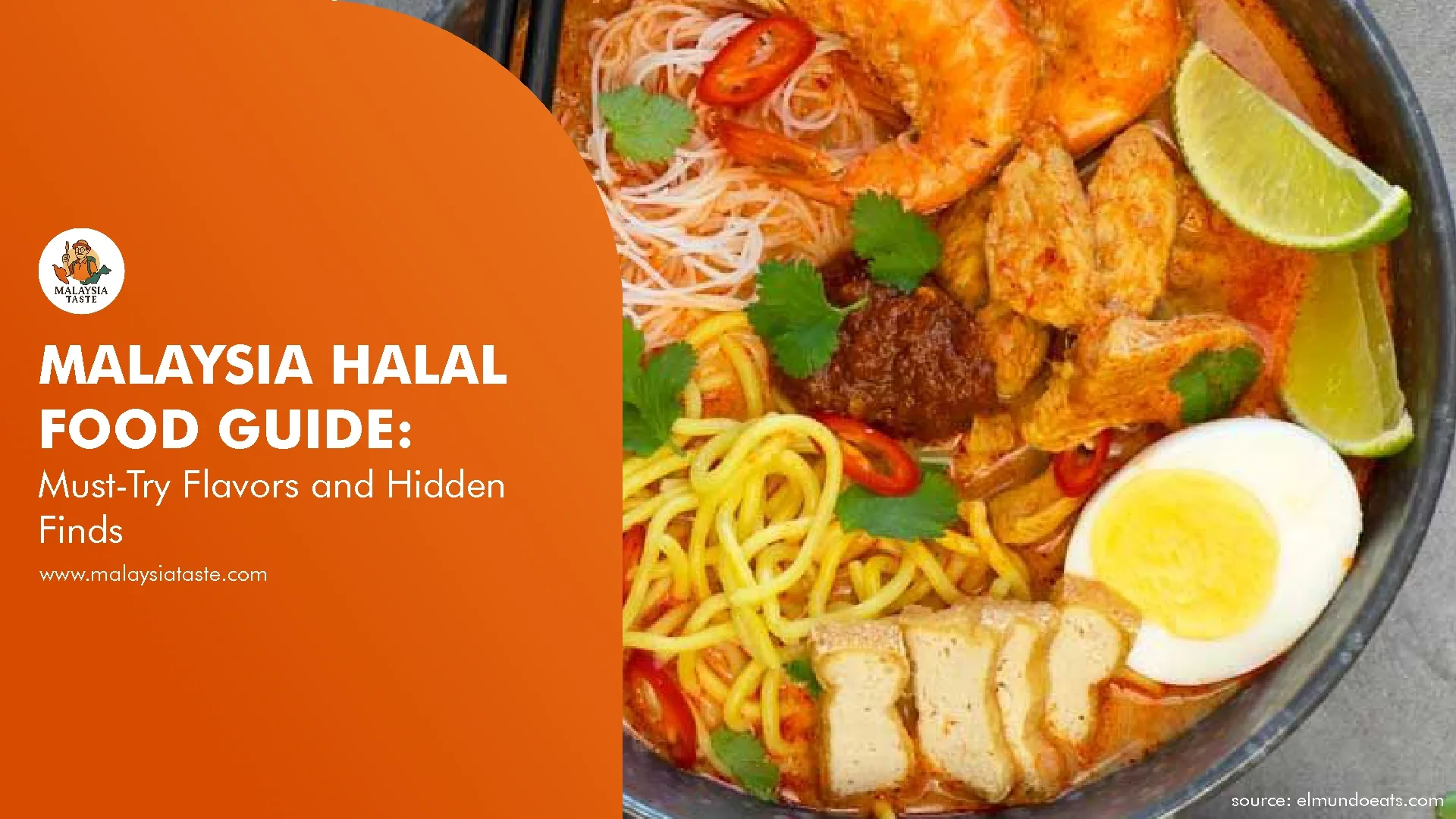
If you eat halal, Malaysia is one of the easiest countries in the world to travel through. Most Malaysians are Muslim, Malay food is halal as a matter of course, and you’ll find halal meals in street stalls, cafés, food courts and malls from Kuala Lumpur to Kuching. Still, not everything here is halal, and it helps to know how to tell. This guide to halal food in Malaysia covers what the halal logo means, which dishes and areas to look for, and how to eat well with peace of mind.
Is all food in Malaysia halal?
No, and that surprises some visitors. Malaysia is a multicultural country, and many Chinese restaurants and hawker stalls serve pork or cook with lard, and some places serve alcohol. Halal food is easy to find, but you do need to check. These three labels are worth telling apart:
- Halal-certified: the business displays the official Halal Malaysia logo, issued by JAKIM or a state Islamic religious authority. Certification is given per premises, so it applies to that specific outlet.
- Muslim-owned: many Malay and Indian-Muslim stalls are run by Muslims but have never applied for certification. Plenty of Muslim travellers eat at these, and it’s a personal decision.
- “Pork-free” or “no pork no lard”: this is common on signs, but it isn’t the same as halal. The meat may not be halal-slaughtered and alcohol may still be used in cooking.
If you see the logo, the outlet is certified. If you don’t, it isn’t necessarily non-halal, but it’s worth asking. JAKIM’s official Halal Malaysia portal lets you check whether a business is certified.
Malaysian halal food: what to eat
Malaysian cuisine mixes Malay, Chinese, Indian and indigenous cooking, and every region has its specialities, from asam laksa in Penang to asam pedas in Melaka. Many halal favourites come from Malay kitchens and Indian-Muslim mamak restaurants:
- Nasi lemak: coconut rice with spicy sambal, crispy anchovies, cucumber and boiled egg, often with fried chicken or rendang. You’ll find it at breakfast stalls and food courts everywhere.
- Satay: chicken or beef skewers grilled over charcoal and served with peanut sauce. Malay satay stalls are halal, but pork satay does exist in some Chinese areas, so check if you’re unsure.
- Roti canai, biryani and teh tarik: the staples of mamak restaurants, which are Indian-Muslim and usually halal.
For a longer list of dishes, see our guide to Malaysian traditional food.
Kuala Lumpur: easy halal eating in the capital
In KL, halal food is never far away. Kampung Baru, the old Malay neighbourhood near KLCC, is full of Malay rice stalls and curries. Chow Kit Market and Little India in Brickfields are good for roti canai and biryani, though in Brickfields you should still check each shop. Big malls such as Pavilion and Suria KLCC have food courts and restaurants with many halal-certified outlets, plus prayer rooms.
Be more careful in Chinatown and on Jalan Alor. Both are mostly Chinese food streets, so many stalls aren’t halal, although you’ll find some Muslim-run stalls if you look for the logo. Our guide to halal food in Kuala Lumpur goes neighbourhood by neighbourhood and answers the question we hear most: is Jalan Alor halal?
Penang: heritage eats by the sea
George Town, Penang’s capital, is a UNESCO World Heritage city with famous street food, and halal travellers will want a plan. A lot of Penang’s best-known hawker food is Chinese and not halal, so look for Malay and mamak stalls, which serve dishes like mee goreng, roti canai and nasi kandar, Penang’s rice with curries. Around Chulia Street and Gurney Drive there’s a mix of halal and non-halal food, so the logo and a quick question are your friends.
Char kuey teow is traditionally cooked with lard, but halal versions are common at Muslim-run stalls, so you can still have that smoky wok flavour. Penang is also known for Peranakan (Nyonya) cooking, a Malay and Chinese blend, and there are halal-certified Nyonya restaurants if you want to try it.
Melaka and beyond: historical flavours and island fare
Melaka’s food reflects its long history as a trading port, with Malay, Peranakan and Portuguese-Eurasian influences. You’ll find halal versions of local favourites such as satay celup, skewers dipped in a pot of bubbling peanut sauce, at Muslim-run outlets. The Jonker Street area mixes halal and non-halal stalls, so check before you order.
Langkawi and Kota Bharu, both in largely Malay areas, are easy for halal eating. In Sabah and Sarawak the population is more mixed, so you’ll need to check more often. Sarawak laksa and kolo mee are often sold in Chinese coffee shops, but halal versions are available at Muslim-run stalls. In Sabah, try hinava, a fresh fish salad cured with lime.
Tips for finding halal food in Malaysia
- Look for the Halal Malaysia logo at the stall or on the restaurant wall, and remember it applies to that outlet, not the whole brand.
- Use JAKIM’s official Halal Malaysia portal to check a business you’re unsure about.
- Ask. Malaysians are used to the question, and most will happily point you to a halal stall nearby.
- Use photo menus. In KL many hawkers and food courts have pictures or English descriptions, so you can point and ask what’s in a dish.
Food tours for halal travellers
We should be upfront about our own tours: our group walks aren’t planned as halal-only routes, and the Jalan Alor and Petaling Street walks stop at stalls that aren’t halal. If you eat only halal, choose our private food tour for groups of five or more, or a custom food tour from two people in Kuala Lumpur, Penang, Melaka or Ipoh. Both can be arranged with halal stops only. Tell us you eat halal when you get in touch, and we’ll confirm the plan before you book. Our guides are MOTAC-registered and lead in English. Our halal food tour page explains how it works, or get in touch with your dates.
Whether you go with a guide or on your own, eating halal in Malaysia mostly comes down to knowing where to look. Start with a plate of nasi lemak and a teh tarik, and selamat menjamu selera (enjoy your meal).
Malaysia Taste is operated by ZFB Travel Sdn Bhd (1565697-H) and licensed by MOTAC (KPL/LN 12070).
Leave a Comment