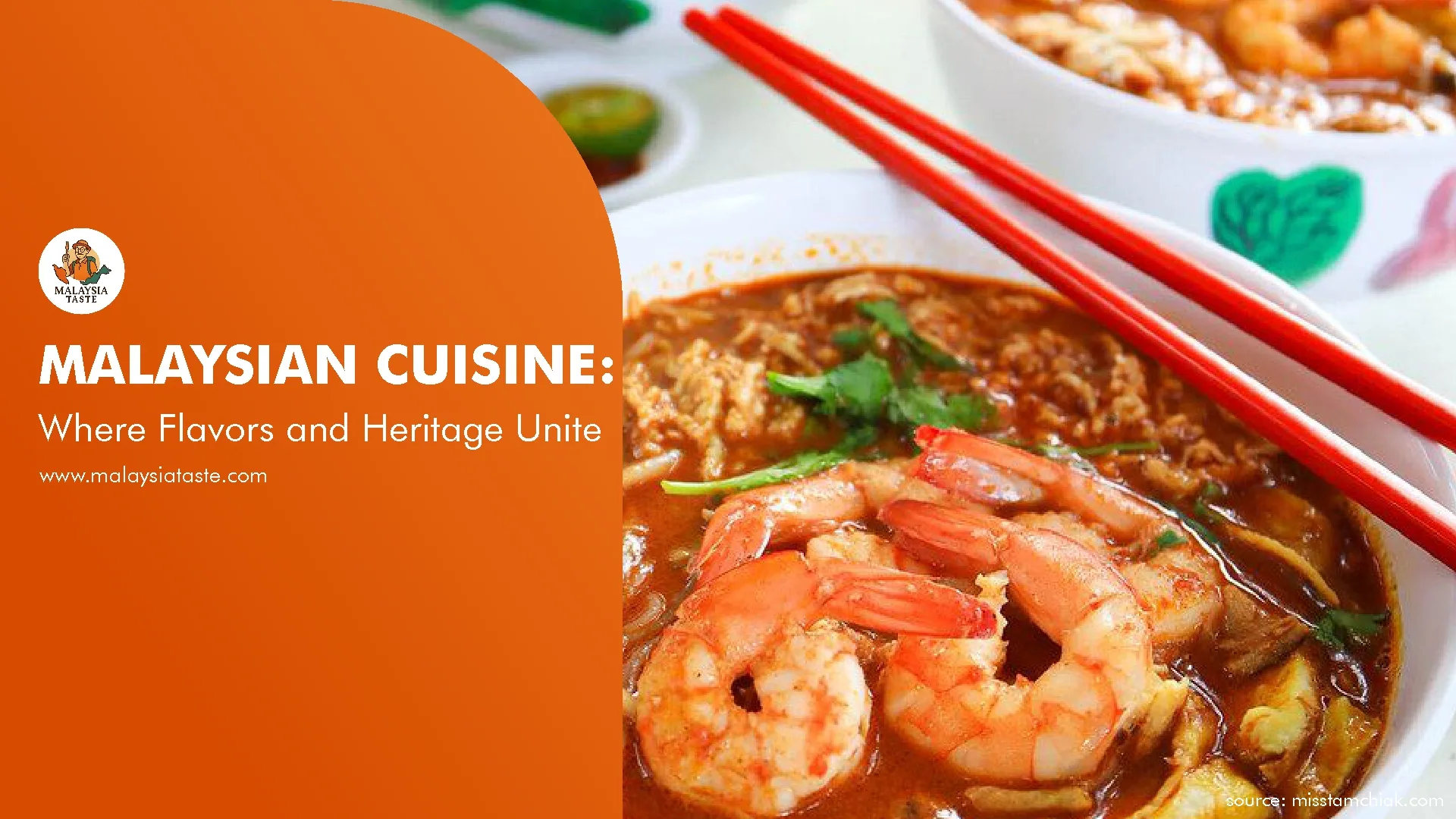
Malaysian cuisine is what happens when Malay, Chinese, Indian and indigenous cooks share the same streets for a few hundred years. At one hawker centre table in Kuala Lumpur you might see Malay nasi lemak, a plate of Chinese char kway teow and roti canai from the mamak stall, all ordered by the same family and passed around. We eat like this every day, and it still surprises us how much the flavours change from one stall to the next.
Below you’ll find what Malaysian food tastes like, the communities who shaped it, the dishes Malaysia is famous for and how meals actually work here, from sharing plates to ordering coffee the local way. For the full dish-by-dish rundown, see our guide to traditional Malaysian food, and for places to eat in the capital, what to eat in KL.
What is Malaysian cuisine?
Malaysia’s food comes from the people who live here. Malays, Chinese and Indians make up most of the population. The indigenous communities of Sabah and Sarawak, the Peranakan (Nyonya) families of Melaka and Penang and a small Portuguese-Eurasian community in Melaka all add dishes of their own, and neighbouring Indonesia and Thailand have left their mark too.
Trade through the Straits of Melaka brought spices, noodles and new ways of cooking long before modern Malaysia existed. In the 1800s, many Chinese families arrived to work in the tin mines around Kuala Lumpur, and many Indian families came to work on rubber estates and the railways. Each group brought its home cooking and then, over generations, borrowed from the others.
The result works like several recipe books on one shelf, with everyone helping themselves. Roti canai arrived with South Indian cooks and is now breakfast for the whole country. Nasi lemak is a Malay dish, yet it often comes with Chinese-style fried chicken or an Indian curry on the side. Even colonial pantry staples crept in: tomato ketchup goes into ayam masak merah, a Malay chicken dish in a sweet and spicy red sauce.
Hawker culture is where you see all of this at once. In a single food court, a Chinese hawker tosses char kway teow over a roaring flame, a Malay stall fans satay over charcoal and a mamak cook stretches roti dough paper thin, a few metres apart.
What does Malaysian food taste like?
Bold and layered, and usually balanced on the same plate. Most dishes bring together several of these at once:
- Heat from fresh and dried chillies, especially in sambal, the chilli paste that turns up with almost everything.
- Sourness from tamarind (asam), lime or green mango, which keeps rich food from feeling heavy.
- Sweetness from palm sugar (gula Melaka) or kicap manis, a thick, sweet soy sauce.
- Richness from coconut milk (santan), the base of rendang, curry laksa and many desserts.
- Savoury depth from belacan, a fermented shrimp paste that smells fierce raw and tastes wonderful once it’s cooked.
- Fragrance from lemongrass, galangal, turmeric, pandan leaves and curry leaves.
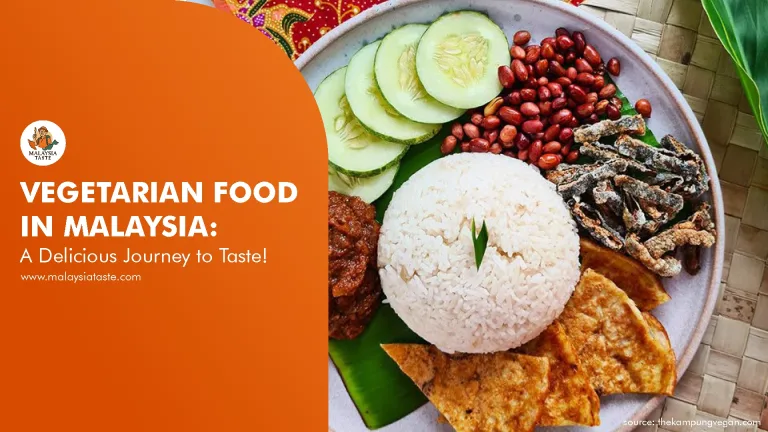
Nasi lemak shows how it all fits together. The rice is cooked in coconut milk with pandan, so it’s creamy and fragrant. The sambal is hot and a little sweet, the fried anchovies (ikan bilis) and peanuts are salty and crunchy, and slices of cucumber cool everything down. That mix of contrasts in one mouthful is what most of us mean when we call something sedap, or delicious.
Not everything is spicy. Chicken rice, satay with its sweet peanut sauce and most kopitiam breakfasts are gentle, and chilli usually comes on the side so you can add as much as you like. If you’d rather keep things mild, ask for kurang pedas (less spicy) and the cook will usually go easy.
The communities behind Malaysian food
Malay cuisine
Malay cooking starts with rempah, a pounded paste of chillies, shallots, garlic, ginger, lemongrass and galangal that is fried slowly in oil until it smells sweet and toasty. Coconut milk, tamarind and fresh herbs do much of the rest. Rendang is the best-known example: beef simmered for hours in coconut milk and spices until the sauce cooks away and the meat turns dark and tender.
At lunchtime, many Malaysians eat nasi campur, plain rice with your pick of dishes from a long counter of curries, fried fish, vegetables and sambal. In the evening, look for ikan bakar, fish grilled over charcoal and eaten with a sharp chilli dip. Malay food is halal.
Chinese Malaysian food
Most Chinese Malaysian families trace their roots to southern China, so Hokkien, Cantonese, Hainanese, Hakka and Teochew cooking all have a place here. Noodles are everywhere. Char kway teow is flat rice noodles fried with prawns, egg, bean sprouts and chives in a very hot wok until they pick up wok hei, the smoky “breath of the wok”. KL-style Hokkien mee is thick yellow noodles braised in dark soy sauce with pork, squid and cabbage, often finished with crispy lard.
Hainanese chicken rice pairs poached chicken with rice cooked in chicken stock, plus chilli and ginger sauces. Bak kut teh is pork ribs simmered for hours in a broth of Chinese herbs and spices, a hearty bowl that many people eat for breakfast. Because many Chinese stalls cook with pork, they aren’t halal.
Indian and mamak food
Tamil families from South India brought banana leaf rice to Malaysia: a mound of rice on a fresh leaf with vegetable sides, papadum, pickles and ladles of curry, eaten with your right hand. Thosai, a thin, crisp crepe made from rice and lentils, is a favourite for breakfast or tea.
Mamak stalls are run by Indian Muslim families, and they’re where Malaysians of every background end up late at night. Order roti canai, the flaky flatbread served with dhal and curry, or nasi kandar, rice with several curries poured over the top, a dish closely linked with Penang. Wash it down with teh tarik, sweet milk tea poured back and forth from a height until it froths. Many mamak restaurants stay open very late, some around the clock, and because they’re halal, friends of every faith can eat together.
Peranakan (Nyonya) food
The Peranakan Chinese, also called Baba-Nyonya, descend from Chinese traders who settled in Melaka and Penang centuries ago and adopted much of local life. Their kitchens combine Chinese ingredients with Malay spices. Ayam pongteh is a Melaka stew of chicken and potatoes cooked with fermented soybean paste and palm sugar. Ayam buah keluak is chicken cooked with the black, earthy keluak nut. Nyonya kuih, small sweet cakes made from rice flour, coconut and palm sugar, come in every colour and shape, from chewy onde-onde filled with liquid palm sugar to layered kuih lapis.
Food from Sabah and Sarawak
In Malaysian Borneo, food draws on the traditions of the Kadazan-Dusun, Iban and many other indigenous groups. In Sabah, hinava is raw fish cured in lime juice with chilli, shallots and ginger, bright and sharp like a ceviche. Sarawak laksa is rice vermicelli in a broth made with tamarind, lemongrass, galangal and coconut milk, topped with chicken, prawns, strips of omelette and coriander. It became famous abroad after Anthony Bourdain called it “breakfast of the gods”. Sarawak is also known for kek lapis, a dense cake baked in bright, patterned layers.
What food is Malaysia famous for?
Ask ten Malaysians and you’ll get ten slightly different lists, plus a long argument. These are the dishes that turn up on almost everyone’s:
- Nasi lemak: coconut rice with sambal, anchovies, peanuts, egg and cucumber, widely called the national dish.
- Satay: skewers of chicken or beef grilled over charcoal and dipped in peanut sauce.
- Char kway teow: flat rice noodles fried over high heat with prawns, egg and bean sprouts.
- Laksa: noodle soup in several regional styles, from creamy curry laksa to sour Penang asam laksa and herbal Sarawak laksa.
- Roti canai: flaky, chewy flatbread with dhal. The food guide TasteAtlas has ranked it the best bread in the world.
- Rendang: meat slow-cooked in coconut milk and spices, a fixture at festive meals.
- Nasi kandar: rice with mixed curries poured over, best known in Penang.
- Bak kut teh: pork ribs in a herbal broth.
- Cendol: shaved ice with coconut milk, palm sugar syrup and green rice-flour jelly.
- Teh tarik: frothy pulled milk tea, sometimes called the unofficial national drink.
- Durian: the spiky “king of fruits”, loved by many locals and notorious for its smell.
Our guide to traditional Malaysian food goes into each of these and plenty more, and our Malaysian dessert guide covers the sweet side, from kuih to ais kacang.
Regional food across Malaysia
Malaysians will happily drive for hours for a particular bowl of noodles, and every state is proud of something.
- Penang is known for hawker food. Char kway teow, asam laksa and nasi kandar top most lists.
- Ipoh is famous for white coffee and bean sprout chicken, served in old-school kopitiam.
- Melaka is the place for Nyonya cooking and chicken rice balls.
- Kelantan and Terengganu, on the east coast, are home to nasi kerabu, rice tinted blue with butterfly pea flowers and eaten with fresh herbs, fish and coconut.
- Kuala Lumpur pulls it all together. You can eat Malay, Chinese and Indian food on the same street, from Jalan Alor in Bukit Bintang to Petaling Street in Chinatown.
Malaysian food culture: sharing, hands and mealtimes
Meals are shared. A group sits down, orders several dishes for the middle of the table and everyone takes a little of each with their own plate of rice. Ordering one main each is fine, but you’ll taste far more if you share.
Most Malaysians eat rice with a spoon in the right hand and a fork in the left, using the fork to push food onto the spoon. Chopsticks come out for noodles at Chinese stalls. With banana leaf rice and many Malay meals, people eat with their hands. Use your right hand only, as the left is traditionally kept for other things, and wash before and after. Restaurants that serve this kind of food usually have a sink by the wall.
Food runs from early morning until well past midnight:
- Breakfast: nasi lemak, roti canai, or kaya toast with soft-boiled eggs and coffee at a kopitiam. Our guide to Malaysian breakfast food has more.
- Lunch: nasi campur from a rice counter, a quick plate of noodles or banana leaf rice.
- Dinner: shared dishes at a restaurant, or a round of street food at a pasar malam, the weekly night market. See our KL night market food guide.
- Supper: a late snack at a mamak stall, which many Malaysians treat as a fourth meal.
How to order at a hawker centre, kopitiam or mamak
The first visit can feel chaotic, but it gets easy quickly.
At a hawker centre or food court, find a table first. Sharing with strangers is normal. Note your table number, then order at each stall you fancy. Some stalls bring the food over and you pay when it arrives, while at others you wait and pay on the spot. Drinks usually come from a separate drinks stall, and someone may come to your table to take that order.
At a nasi campur counter, take some rice and point at the dishes you want. You pay for what’s on your plate, so feel free to ask the price before you sit down.
At a kopitiam, coffee has its own vocabulary. Kopi comes sweetened with condensed milk, kopi O is black with sugar, adding kosong means no sugar, and ais (or peng) means iced. Teh works the same way for tea. Our guide to kopitiam in Kuala Lumpur has the full drinks list and what to eat with them.
At a mamak, start with roti canai and teh tarik and work down the menu from there. Nobody minds if you linger.
Keep some small notes handy, since smaller stalls may not take cards. Tipping isn’t expected at hawker stalls.
Halal and vegetarian food in Malaysia
Malaysia is a Muslim-majority country, so halal food is easy to find. Malay restaurants and mamak stalls are generally halal, and many restaurants and chains display a halal certificate from JAKIM, the government’s Islamic development department. Chinese stalls often cook with pork. A “pork-free” sign means no pork is served, which isn’t the same as halal certification, so look for the certificate if that matters to you. Our guides to halal food in Malaysia and halal food in Kuala Lumpur go into more detail.
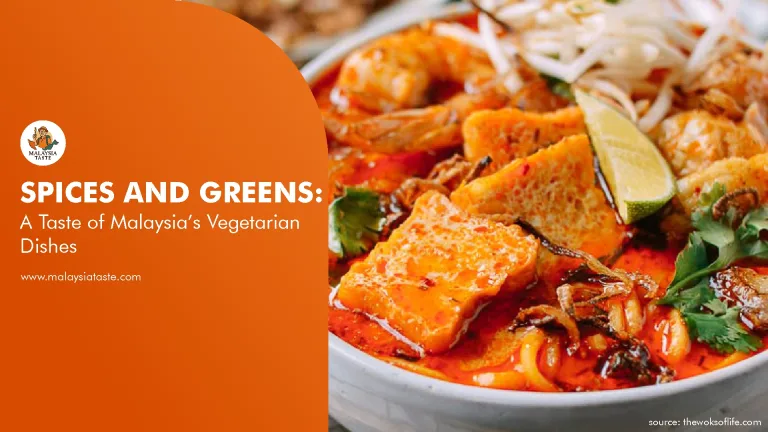
Vegetarians do well here too. South Indian banana leaf restaurants serve plenty of vegetable dishes, and Chinese Buddhist vegetarian restaurants make meat-free versions of local favourites. Watch for belacan, fish sauce and anchovies hiding in sambals and broths, and say clearly what you don’t eat when you order. Our guides to vegetarian food in Malaysia and vegan Malaysian food list dishes to look for.
Where to start on your first trip
There’s no need to cover the whole country in one visit. Pick a dish or two a day and let your curiosity do the rest. A morning at a kopitiam, an afternoon bowl of laksa and an evening on a food street make a good first day. Our Malaysian street food guide has more dishes to look for, and if you’re travelling with children, our guide to Malaysian food for kids suggests gentle places to begin.
Taste Malaysian cuisine with a local in Kuala Lumpur
Kuala Lumpur is the easiest place in Malaysia to try a bit of everything, because Malay, Chinese and Indian kitchens sit side by side. On our Jalan Alor food tour in Bukit Bintang, you’ll try dishes such as char kway teow, satay, roti canai, nasi lemak and cendol in one evening. Our Petaling Street food tour explores Chinatown by day, with stories about the migration and trade that shaped what the city eats. Both are led in English by MOTAC-registered guides who are happy to explain everything on the plate.
Join us or explore on your own, and come hungry either way. Order at least one thing you can’t pronounce yet. Selamat makan, as we say here: enjoy your meal.
1 Comment
Leave a Comment